Custom Rail Bender, Delivered Ahead of a Critical-Program Deadline
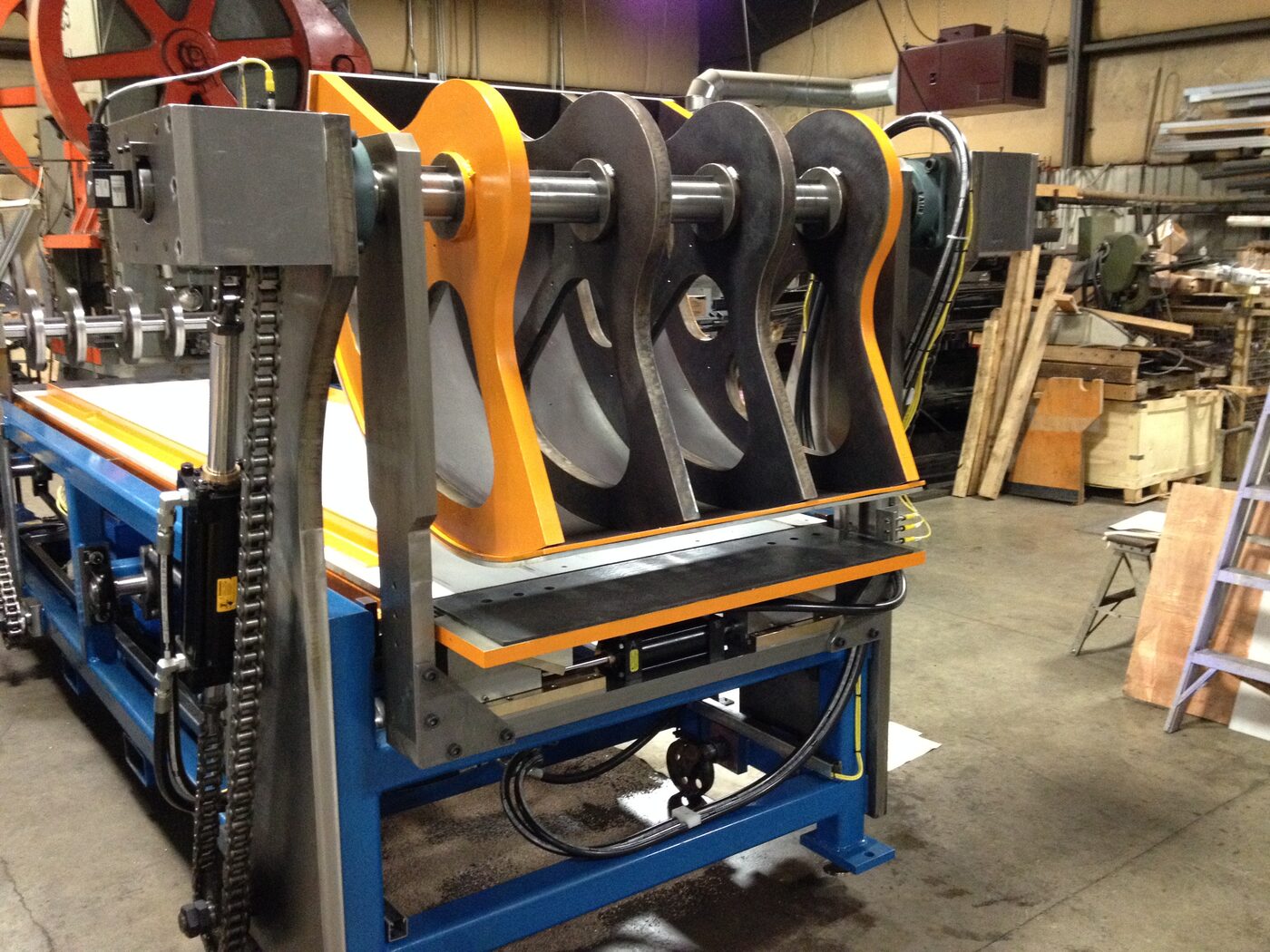
A U.S. industrial electrical OEM needed a custom rail bender to hit a program milestone. Off-the-shelf equipment couldn't meet the geometry. Bristol designed it, built it, and shipped it ahead of the original purchase-order date. It's in production today.
A late delivery on a critical program is not a line-item problem
For a sourcing director sitting inside a critical production program, a capital equipment delay is never just a budget variance. It cascades. Line start moves. Customer commitments slip. Engineering resources that were staged to bring up the new process are now burning time on workarounds. When the machine finally shows up late, it arrives into a team that has already spent its runway — and every day of commissioning friction compounds.
Industrial OEMs have been trained by hard experience to plan around vendor slippage — padding schedules, overstocking raw material, staffing launch teams for contingency. That mitigation is expensive. And it only helps if the miss is small. On a critical program, where downstream assembly commitments are already locked, a multi-week delay on a custom machine can breach obligations that cost real money to remedy.
That is the environment a U.S. industrial electrical OEM was managing when it needed a custom rail bender built on a compressed timeline.
Why off-the-shelf benders don't work for electrical-OEM rail geometry
Standard catalog benders are designed around common stock geometries — square tubing, round pipe, standard structural profiles. That is a reasonable design choice for a product that has to serve broad market demand. It is not the right choice for an industrial electrical OEM building custom rail assemblies to a specific design envelope.
Electrical rail components regularly involve non-standard cross-sections, tight bend radii relative to wall thickness, and positional tolerances that a catalog machine won't hold across a production shift. The tooling on a generic bender — the dies, the wiper, the pressure die geometry — is optimized for typical material. When the material or profile is atypical, the bends don't come out right. Springback behavior changes. Ovality creeps up. The formed part looks close but doesn't assemble correctly downstream.
Attempting to adapt a catalog machine to a non-standard application is a common path and usually a losing one. The machine is engineered around its own tooling envelope. Modifying it produces a machine that is no longer supported by its original manufacturer and has geometry compromises baked in at the foundation. The correct answer for a production bending application with specific rail geometry is a machine designed around that geometry from the first sketch.
That is what the OEM needed. And it needed it on a schedule that didn't allow for the lengthy negotiation and design-iteration cycles that define most custom-equipment procurement processes.
The Bristol process: spec to ship, compressed
Bristol Tool & Die – Automation runs a flat project structure. The engineering bench — three engineers carrying over 100 combined years of industrial automation experience across custom machinery, die design, and controls — engages directly with the customer from the initial specification conversation. There is no hand-off from sales to application engineering to design to build. The people who design the machine are the people who build it and the people who answer the phone when the customer calls.
That structure matters on compressed timelines. The most common source of schedule slippage in custom equipment projects is not machining time or assembly time. It is decision latency — the time consumed waiting for an answer from someone who wasn't in the original conversation, resolving an ambiguity in a spec that was written by committee, or reworking a design that got approved by the wrong person. Bristol's team eliminates most of those friction points by keeping the authority to decide and the knowledge to decide in the same room.
For the rail bender program, the process ran the same way it does on every Bristol project: specification alignment up front, engineering design against that specification, internal design review, and then build. The Bliss 200-ton straight-side tryout press at Bristol's facility allows the team to validate tooling behavior under production-representative loads before a machine leaves the building. The wire EDM equipment — two Charmilles Robofil machines holding ±0.0001” — produces tooling components to dimensional requirements that field-fit work cannot match. What gets shipped is a machine that has already demonstrated correct forming behavior at Bristol, not one that discovers its geometry on the customer's floor.
Lead-time discipline: how a 6–10 month custom build hits early
Bristol's standard range for custom automation is 6–10 months from purchase order to delivery — a range that reflects real variation in machine complexity, not a soft band that gets managed upward as the project develops. The rail bender was a single-purpose custom machine, not a 23-station integrated cell. Scope-appropriate lead time was compressed from the start. The program hit early anyway.
Hitting early on a custom build requires the same discipline as hitting on-time, applied upstream. The schedule risk on a custom machine project sits in procurement — long-lead components ordered late, vendor delivery misses on critical parts — and in design iteration cycles that consume build time. Bristol manages both through front-end rigor. Component selection happens early in the design process, with procurement moving in parallel with detailed design rather than sequentially behind it. Designs go through internal review before build starts, not during build when corrections cost real labor.
The team Bristol fields for projects of this type — engineers and senior designers with 40-year individual careers in tooling and automation — has seen every common failure mode. Design choices that produce schedule problems downstream get caught at the drawing stage. That institutional knowledge doesn't appear in a spec sheet or a capability brochure. It shows up in delivery records.
For the OEM on this program, showing up ahead of schedule meant the downstream team had margin. Line start could proceed as planned. The capacity that had been allocated for launch risk management stayed in the production budget instead of being consumed by recovery.
What the geometry actually required
Designing a bender for a specific rail profile means resolving the full forming sequence from material loading through ejection in terms of that profile's actual behavior — not generic bending theory. The relevant variables are the material's yield strength and springback coefficient at the target bend radius, the die geometry required to produce the correct inside radius without ovality or wall thinning beyond tolerance, the clamp and wiper geometry needed to prevent distortion at the bend tangent, and the overall machine throat and fixture envelope needed to handle the part length.
Bristol's equipment base is suited to this work. The waterjet — 10’×20’ cutting area, ±0.005” accuracy, cuts up to 6” steel — produces tooling blanks and structural components in-house without subcontracting delays. The Hurco CNC mills and CNC lathes finish tooling components to specification. The wire EDM machines produce detail work at tolerances that drive fit-up quality. When the bending die geometry needs to be refined after a tryout pass, the correction happens in the same facility, by the same team, without shipping work out and waiting for it to come back.
The result is a machine where the geometry was resolved before it left the building — not a machine sent to the customer with known tryout work remaining.
The OEM came back
The rail bender is in production today. That is the outcome every capital equipment purchase is designed to produce and not every purchase achieves. Machines that are designed to specific application geometry with production-representative tryout behind them before they ship consistently outperform machines procured on price or availability and adjusted to fit in the field.
Bristol's track record across its active customer base reflects this. The hydraulic railing bender platform has been in continuous production for five marine OEMs for over ten years, generating approximately $510,000 per year in combined revenue across that customer set. The 23-station shackle-link assembly cell for a Tier-1 RV chassis OEM has passed four million cycles and is still running. The arm-bar press built for a leading trailer-axle and suspension manufacturer was described by that customer's own engineering leadership as the heart and soul of their suspension line. These are not machines that were sold, installed, and forgotten. They are machines that were designed to run — and have.
The industrial electrical OEM on this program made a decision to source from a domestic custom-automation builder operating on a transparent schedule with its engineering team directly accountable for the outcome. The machine was delivered ahead of the date that decision was made against. It is running today.
For sourcing directors who have been burned by overseas vendor slippage
The overseas custom-equipment procurement cycle has a standard shape that most sourcing professionals have seen at least once. The initial price is lower. The quoted lead time is comparable to domestic. The engineering review cycle runs via email across a time-zone gap, and each round takes longer than it should. The first delivery date slips quietly — the vendor cites a component delay, a shipping window, a factory holiday. The machine arrives with interface issues or documentation gaps that weren't apparent in the PDF review. The startup consumes more time than the project plan allocated. And the engineering team you've been emailing is 8,000 miles away when the line comes up.
That calculus only holds if the initial price is the right number to compare. When delivery slippage has downstream program cost, when startup friction consumes engineering time that was budgeted elsewhere, when the machine runs for a decade and the vendor relationship is what determines whether you get parts and support — the price on the quote sheet is not the number that matters.
Bristol is an Indiana facility with the engineering team and the production floor in the same building, the CEO reachable by direct email, and a delivery record that includes ahead-of-schedule on a critical electrical OEM program. That is a different risk profile than the overseas alternative. For a program where lateness costs real money, it is worth a conversation.
Bristol Tool & Die – Automation can be reached at 574-848-5354 or 574-848-5354. Project inquiries reach the engineering team directly.
Frequently Asked Questions
Common questions about this case.
Why can't an off-the-shelf bender handle electrical-OEM rail geometry?
Standard catalog benders are designed for common stock profiles — round pipe, square tube, standard structural shapes. Electrical rail assemblies regularly require non-standard cross-sections, tight bend radii relative to wall thickness, and positional tolerances a catalog machine won't hold across a production shift.
Attempting to adapt catalog tooling to a non-standard profile produces geometry compromises baked into the machine's foundation. A production bending application with specific rail geometry requires a machine designed around that geometry from the first sketch — with tooling validated on production-representative material before the machine ships.
What is Bristol's typical lead time for a custom bender or single-purpose automation machine?
Bristol's standard range for custom automation is 6–10 months from purchase order to delivery. Single-purpose machines at lower complexity sit at the shorter end of that range.
The rail bender for the U.S. industrial electrical OEM was delivered ahead of the scheduled date. Lead-time discipline is driven by front-end rigor: procurement moving in parallel with detailed design, internal review before build starts, and an engineering team that catches schedule-risk design choices before they reach the floor.
How does Bristol validate bending tooling before it ships?
Bristol validates tooling on the Bliss 200-ton straight-side tryout press at its Bristol, Indiana facility, under production-representative loads.
Tooling components are produced in-house using Charmilles Robofil wire EDM machines holding ±0.0001” and Hurco CNC mills. Corrections identified during tryout are made in the same facility by the same team — no subcontracting delays.
What ships is a machine that has already demonstrated correct forming behavior at Bristol, not one that discovers its geometry on the customer's floor.
How does Bristol's approach compare to sourcing a custom bender from an overseas vendor?
The overseas custom-equipment cycle typically offers a lower initial price and a quoted lead time that looks comparable to domestic. In practice:
- Engineering review runs across a time-zone gap, with each round taking longer than it should
- First delivery dates slip, attributed to component or shipping delays
- Machines arrive with interface issues or documentation gaps not visible in PDF review
- Startup consumes more time than the project plan allocated
When delivery slippage carries downstream program cost, the initial price is not the right comparison. Bristol is an Indiana facility with engineering and production in the same building, a CEO reachable by direct email, and a delivery record that includes ahead-of-schedule on a critical electrical OEM program.
Ready to discuss your project?
Tell us your part, your volume, and your timeline. We’ll respond within one business day with a clear next step.