OMAX Abrasive Waterjet — 10' × 20' Table, Up to 6" Steel, ±0.005" Accuracy
Bristol's OMAX abrasive waterjet is an in-house supporting capability — primarily used to cut structural plates, machine frames, mounting brackets, and preforms for Bristol's own die and automation builds. The 10′ × 20′ table cuts up to 6″ thick steel at ±0.005″ accuracy with zero heat-affected zone, across metals, composites, plastics, and specialty materials. Limited contract work is accepted when shop loading allows.
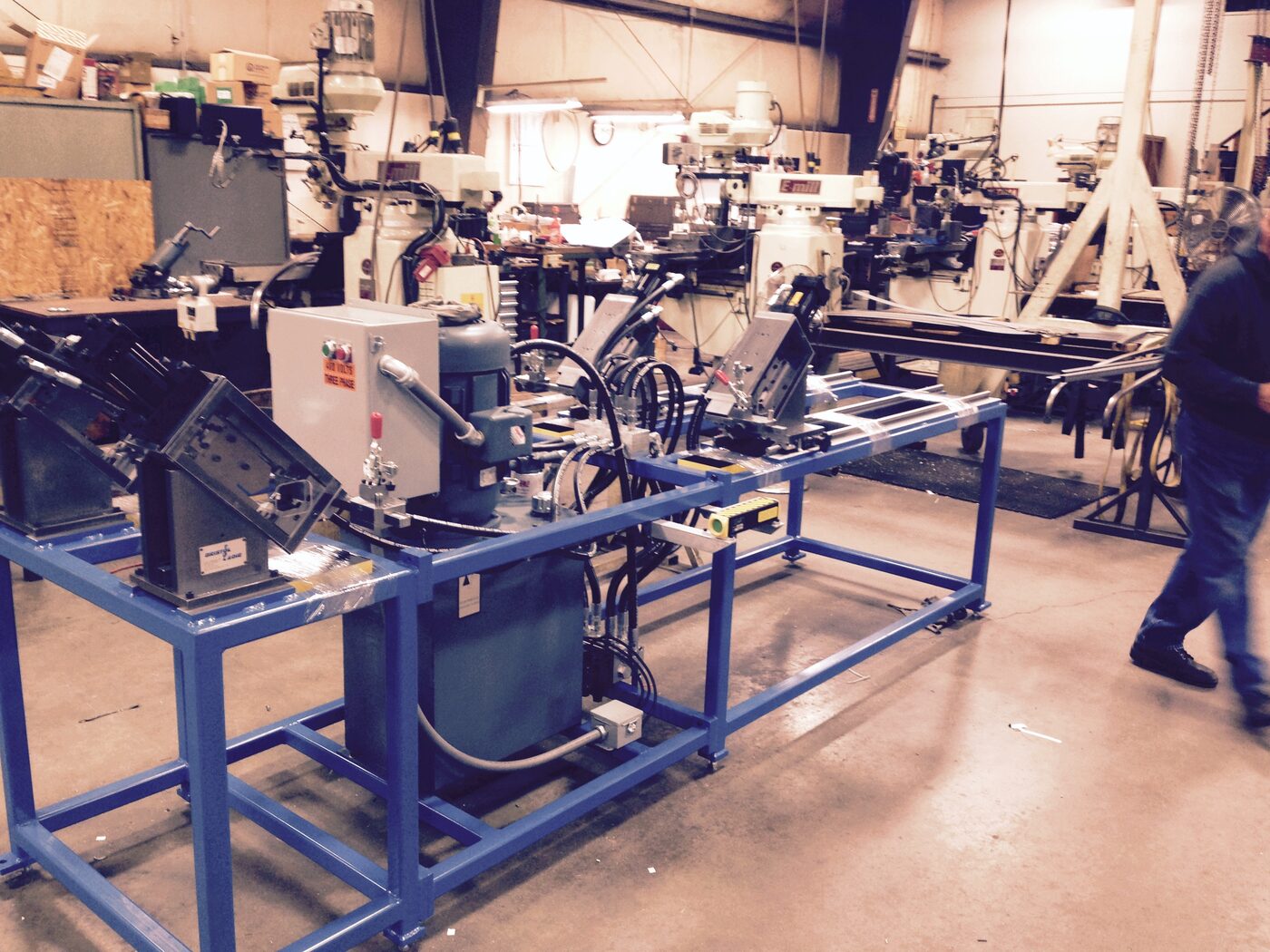
10′×20′ OMAX — Cutting Plates, Frames, and Brackets for Bristol's Own Builds
The OMAX runs primarily in support of Bristol's die and automation programs — cutting structural plates, machine frames, mounting brackets, cover panels, and preforms that feed directly into the CNC, wire EDM, and assembly work happening on the same floor. The cold-cut advantage is real: no heat-affected zone means the material at the cut edge has the same metallurgical properties as the material an inch away. Parts destined for welding, post-cut hardening, or high-stress service don't pick up the secondary processing penalty that laser or plasma cutting impose.
Most waterjet work at Bristol is internal. When shop loading allows, Bristol accepts limited contract waterjet work — the same 10′×20′ table with the same tolerances. Turnaround on contract jobs depends on current internal scheduling; contact us to confirm availability.
Steel up to 6", aluminum, stainless, composites, stone, glass
- Steel plate — mild steel, HSLA, structural plate for machine frames, gussets, mounting plates.
- Stainless steel — 300- and 400-series for food, medical, and corrosion-resistant applications.
- Aluminum — 5052, 6061, 7075 for structural and cosmetic components.
- Tool steel and hardened materials — pre- or post-heat treat without affecting hardness.
- Composites and plastics — UHMW, polycarbonate, fiberglass laminates, carbon fiber where edge quality permits.
- Brass, bronze, copper — conductive and decorative metals.
- Stone, glass, ceramic — for specialty fixturing and prototype work.
No heat-affected zone. No thermal distortion. No reheat treat.
Parts that go straight to welding or hardening
Laser and plasma cutting deposit heat at the cut edge — that heat-affected zone is a quality variable for any part that will be welded near the cut, hardened post-cut, or stressed near the edge. Waterjet eliminates it. The edge you receive is the edge the print specifies, without the secondary processing step to remediate the HAZ.
Material versatility that laser and plasma can't match
Steel plate to glass to laminated composites — on the same machine, with a setup change. If a rotating tool can't reach it and a wire EDM can't cut it (non-conductive), the OMAX can.
Edge quality ready for direct use
Waterjet edge quality is typically sufficient for direct welding, assembly, or finishing. For higher-finish requirements, quality-cut settings are quoted accordingly. Send the print with your finish requirement and we'll confirm the process.
Waterjet inside a Bristol integrated program
The same shift running die details on wire EDM runs structural plate on waterjet for the machine that die will eventually live inside. Single PO, single shop, no vendor-coordination overhead. For contract work when capacity is available: send DXF, DWG, or STEP. Turnaround depends on current shop loading; typically 1–3 weeks when capacity allows.
Waterjet specifications: table size, accuracy, throughput
- Cutting area: 10′ × 20′ table — handles full production sheet sizes.
- Material thickness: Cuts up to 6″ thick steel, plus non-metals of equivalent thickness.
- Accuracy: ±0.005″ on most materials and thicknesses; quality-cut settings available for tighter work.
- Edge quality: Standard, smooth, or quality finish selectable per cut.
Every material we cut on the OMAX
The OMAX handles the full production material roster — from structural plate on a machine frame to architectural composites on a specialty fixture program. If it's flat and it fits the table, it runs here.
Metals and industrial materials
- Acrylic, Aluminum, Brass, Bronze, Carbon Fiber, Ceramics
- Steel plate (mild, HSLA, stainless 300/400-series), Tool steels (pre- or post-heat treat)
- Copper alloys, Stone and glass (specialty fixturing)
Boat, home, and RV materials
- Aluminum bonded plywood, Carbon fiber panels
- Counter-tops, Composites, Fiberboard
- Specialty laminates and architectural materials
Frequently Asked Questions — Waterjet Cutting
Common questions about Bristol's in-house waterjet capability and the limited contract work accepted when shop loading allows.
What materials can Bristol cut on the OMAX abrasive waterjet?
Virtually any material:
- Mild steel and HSLA plate
- Stainless steel: 300-series and 400-series
- Aluminum: 5052, 6061, 7075
- Tool steels, pre- or post-heat treat
- Composites: fiberglass, carbon fiber, laminates
- Plastics: UHMW, polycarbonate, acrylic
- Brass, copper, bronze
- Specialty materials: stone, glass, ceramic for fixturing
Why would I choose waterjet over laser cutting?
Choose waterjet when:
- You need to avoid a heat-affected zone (welding near cut, hardening post-cut, stress near edge)
- Your material is too thick for laser, or the laser-cut edge requires secondary processing
- Your material is non-metal or composite
- Edge quality requirements are met by waterjet finish without secondary work
Choose laser when speed dominates and the part will not be affected by the small heat-affected zone — typically thin-gauge production stamping blanks.
What is the typical tolerance on a waterjet-cut part?
Standard waterjet tolerance is approximately ±.005 inch on most materials and thicknesses.
Tighter tolerances are achievable with quality-cut settings at slower cut speeds, depending on material and thickness.
For tolerances tighter than ±.003 inch on specific features, we typically combine waterjet (for the bulk cut) with CNC or wire EDM (for the precision features) on the same part.
What file formats does Bristol accept for waterjet quotes?
Standard CAD formats:
- DXF and DWG for 2D part geometry (preferred)
- STEP and IGES for 3D models where waterjet-relevant geometry can be extracted
- PDF prints acceptable for quoting, but a vector file is required to cut
Send files with the quote request and we will confirm receipt and any conversion needed before pricing.
How quickly can Bristol turn around a waterjet contract job?
Waterjet capacity is scheduled around Bristol's internal die and machine builds first. Contract work is accepted when shop loading allows — turnaround is typically 1 to 3 weeks when capacity is available, but this is not guaranteed. Contact us before planning around a specific date to confirm current availability.
Material commonly stocked (mild steel plate, aluminum sheet) can move faster than specialty materials that need to be ordered.
Does Bristol provide material, or do I supply it?
Both:
- Bristol stocks common production materials — mild steel plate, aluminum sheet, common stainless — and can supply on the quote.
- For specialty materials, certified material lots, or customer-furnished material, the buyer typically supplies and we cut.
- Material certifications and traceability are passed through where required.
Where Waterjet Fits in Bristol's Work
Bristol's waterjet runs primarily in support of its own die and machine builds. Where contract capacity is available, it supports the same industries Bristol serves across its other capabilities.
Ready to discuss your project?
Tell us your part, your volume, and your timeline. We’ll respond within one business day with a clear next step.