Hydraulic Railing Benders for Aluminum Extrusion — Pontoon Rail Specialty Since 1999
Bristol designs and builds hydraulic railing benders for 6061-T6, 6063-T5, and 6005A-T61 aluminum extrusion — consistent radius, no chatter, no draw lines, no scuffing on visible surfaces. The hydraulic railing bender platform has been in continuous production since 1999, currently serving five active marine OEMs (~$510K/year). Bristol builds the bending equipment; OEM customers weld their railings at their own facilities.
What is a hydraulic railing bender, and why does finish quality matter?
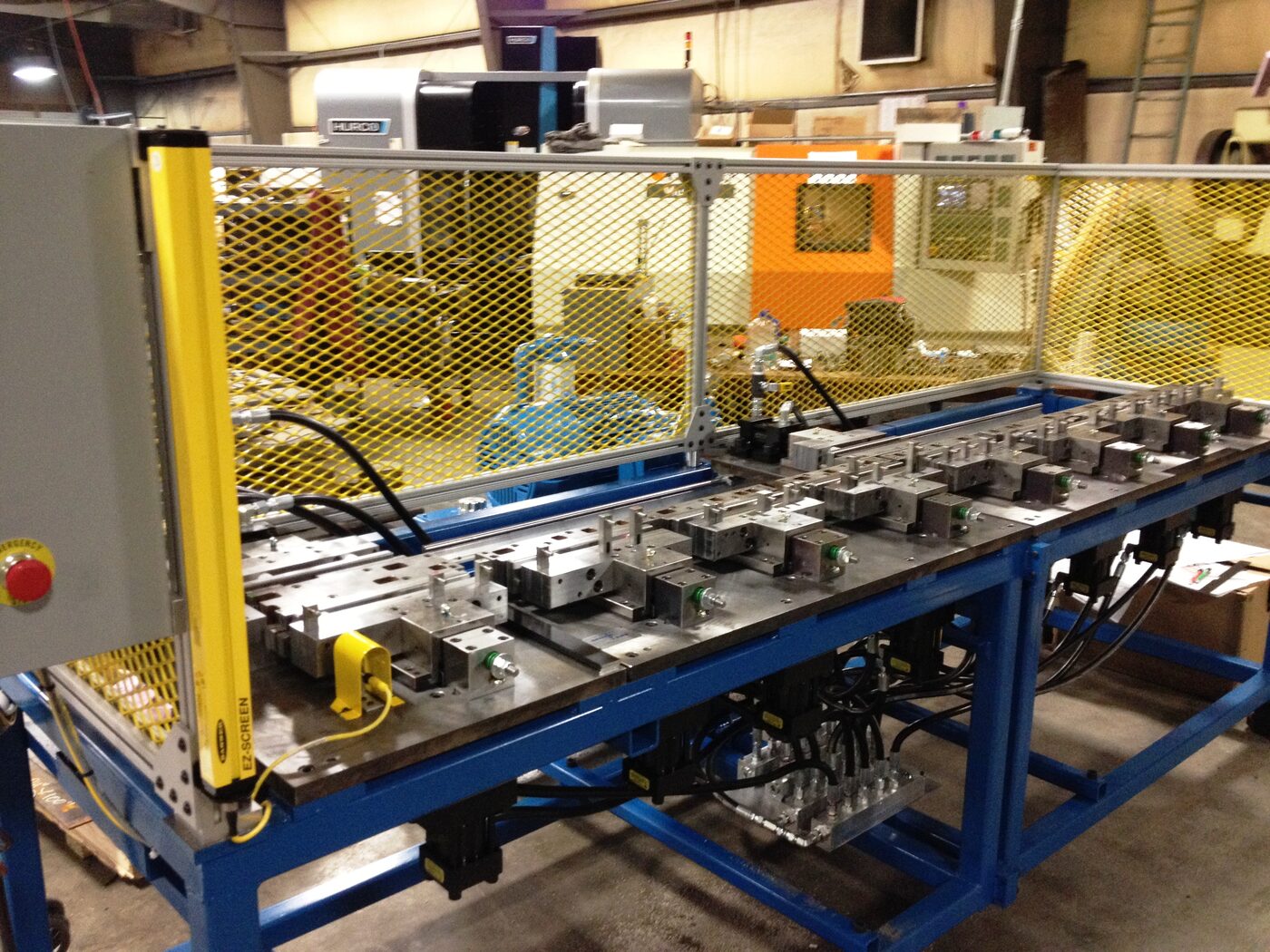
A hydraulic railing bender is a machine that forms an aluminum extrusion into a consistent radius — without distorting the profile or damaging the surface. The extrusion (a long aluminum shape, like a tube or channel) is loaded into the bender, and hydraulic force curves it to the exact geometry the railing design calls for.
For pontoon boat manufacturers, surface finish on the bent railing is critical. Pontoon railings are a visible finished component — the part a customer touches and looks at on day one. A bender that produces chatter marks (small ridges from tool vibration), draw lines (scratches from tooling contact), or surface scuffing creates a cosmetic defect that shows in the finished boat. Bristol’s tooling geometry and process setup are specifically engineered to prevent those defects: the radius is consistent, and the surface comes off the machine clean.
Bristol builds the bending machines. The OEM customers weld their railings at their own facilities. Bristol does not weld or fabricate structural assemblies.
The hydraulic railing bender platform: in continuous production since 1999
The hydraulic railing bender platform is a hydraulic railing bender designed for pontoon railing production. It handles the three aluminum tempers most common in pontoon and marine manufacturing:
- 6061-T6 — structural applications, higher yield strength, primary structural railing.
- 6063-T5 — decorative profiles, smoother surface, architectural-finish railing.
- 6005A-T61 — RV frame and marine structural extrusions requiring a balance of strength and extrudability.
The bender produces railings that are dimensionally correct and visually clean: consistent radius, no chatter marks, no draw lines, no scuffing on the visible surface. That surface quality matters to OEMs because pontoon railings are a visible finished component the end customer sees on day one.
The platform has been in continuous production since 1999 — over 20 years — currently serving five active marine OEMs. Approximate annual revenue across the program: $510,000. Same equipment. Same buyer relationships. Same Bristol shop.
Looking for extrusion fabrication machines? Notch & pierce, cut-off & notching, feeder systems, CNC drill & tap, and brush/surface abrasion equipment are covered on the Extrusion Fabrication Equipment page.
Frequently Asked Questions — Pontoon Rail Benders
What buyers, engineers, and procurement teams want to know before quoting a hydraulic railing bender program.
What aluminum tempers does the Bristol railing bender handle?
The hydraulic railing bender is set up for the three tempers most common in pontoon and marine manufacturing:
- 6061-T6 — structural applications, higher yield strength, primary structural railing.
- 6063-T5 — decorative profiles, smoother surface, architectural-finish railing.
- 6005A-T61 — RV frame and marine structural extrusions requiring a balance of strength and extrudability.
Changeover between profiles is handled at the tooling level.
Why does finish quality matter so much on a pontoon railing bender?
Pontoon railings are a visible finished component. End customers see them on day one. A bender that leaves chatter marks, draw lines, or surface scuffing creates a cosmetic defect that cannot be reworked out of a formed railing without significant cost.
Bristol’s tooling geometry and process control are specifically engineered to prevent those defects: the radius is consistent, and the surface comes off the machine clean.
Who welds the railings — Bristol or the OEM?
The OEM welds the railings at their own facility. Bristol builds the hydraulic bending equipment that forms the extrusion to the correct radius.
Bristol does not weld railings or perform in-house structural fabrication. The OEM receives production-ready bent profiles and welds them into finished railing assemblies at their plant.
What is the typical lead time for a new railing bender?
Lead time depends on the profile geometry, tooling complexity, and current shop loading. Contact Bristol with your extrusion profile print and production volume for a specific quote. For established platform variants (re-orders for existing OEM programs), lead times are shorter.
How is a railing bender program quoted?
By the project. Bristol quotes the bender and tooling as a fixed-price package once the extrusion profile print and production requirements are understood. Provide your profile print or 3D model, annual volume, and any specific radius or finish requirements to initiate a quote.
Does Bristol make aluminum or plastic extrusion dies?
No. Bristol does not make aluminum or plastic extrusion dies (the profile dies the material is pushed through — think of pushing aluminum through a shaped opening to create the extrusion profile). Bristol designs and builds the equipment that bends and processes extrusions after they are made.
For extrusion fabrication machines (notching, cut-off, drill and tap), see the Extrusion Fabrication Equipment page.
Industries using Bristol Railing Benders
These pages show how hydraulic railing benders are applied for specific buyer types and project profiles.
Ready to discuss your project?
Tell us your part, your volume, and your timeline. We’ll respond within one business day with a clear next step.