
Precision Fixtures, Commended by a Defense Prime
A U.S. defense prime contractor headquartered in Indiana needed precision fixtures for light-tactical-vehicle platforms that would pass government inspection without exception. Bristol Tool & Die built them. They passed. The prime's quality and program leadership put the commendation in writing.
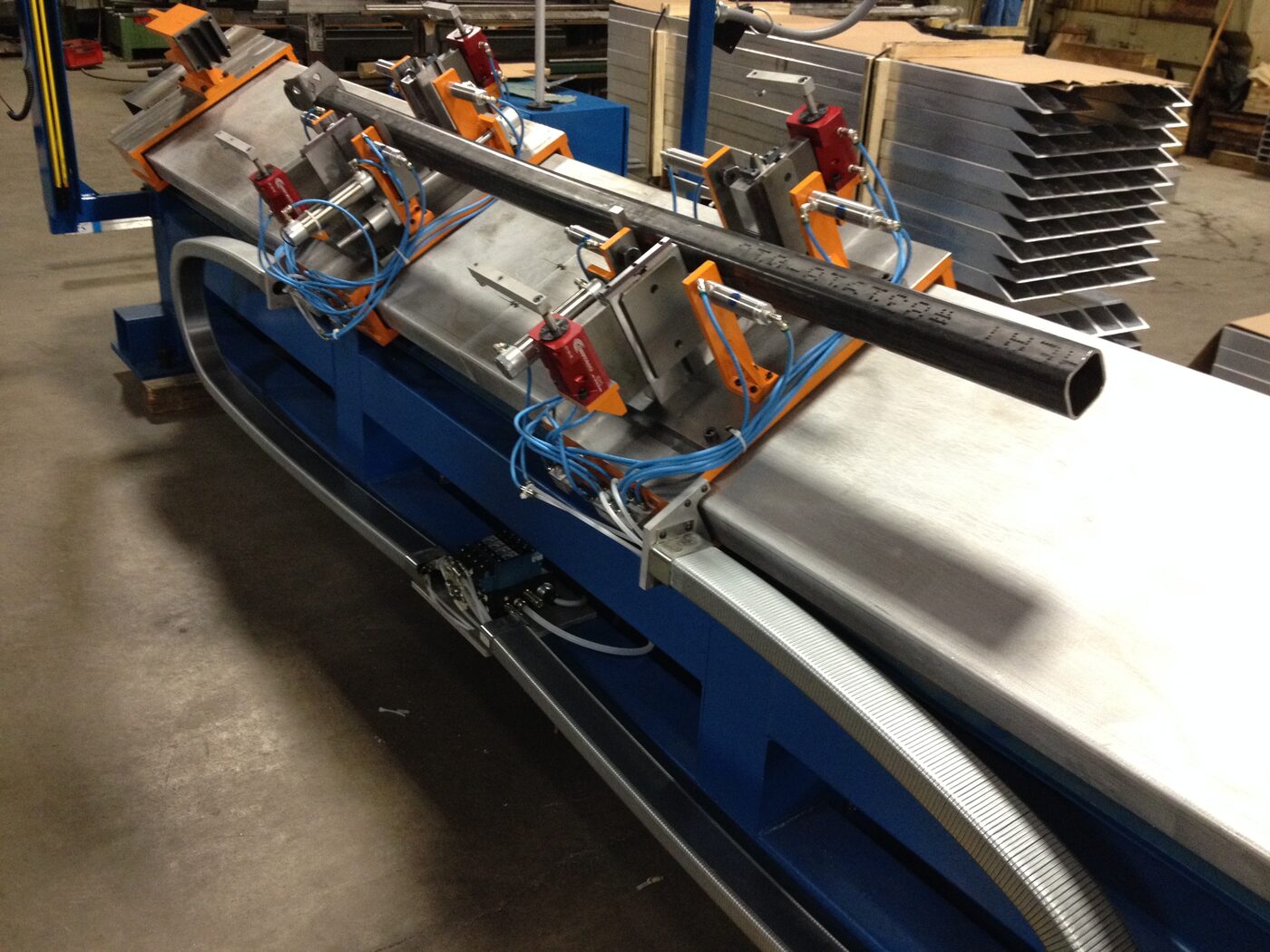
Why Fixture Programs Fail Government Inspection
Most commercial fixture shops that attempt defense work have one thing in common: they approach a government inspection the same way they would approach a customer acceptance review on an automotive or industrial program. They build to the drawing, check the critical features, and ship. That mindset gets programs rejected.
Government inspection on a defense platform is not primarily a dimensional event. It is a documentation and traceability event that happens to include dimensional verification. The inspectors are not just measuring parts — they are auditing whether the traceability chain from raw material to finished fixture can be reconstructed without gaps. Tolerance drift discovered during inspection is the symptom. The root cause is almost always a combination of inadequate process documentation, missing first-article records, and dimensional control that was never designed to hold under scrutiny.
Three failure modes show up repeatedly on fixture programs that do not pass:
- Tolerance drift without process controls. A fixture that dimensions correctly on day one and walks out of tolerance in production is a fabrication process problem, not a measurement problem. Without documented controls on how critical features are produced — sequence of operations, tooling qualification, final inspection steps — there is no credible basis for the prime or government to certify that the fixture will perform consistently across the program run.
- Paperwork gaps in the build record. Defense primes and government inspectors want to see a continuous record from material cert to final dimensional report. A shop that builds excellent fixtures but does not document each step produces an uninspectable deliverable, regardless of the actual dimensional outcome. One missing material cert or one undocumented rework event can stop an inspection entirely.
- No traceability on changes. Engineering changes during fabrication are normal. What is not acceptable on a defense program is an undocumented change — even a beneficial one. A weld pass relocated to resolve a fit issue, a toolpath adjusted to hold a feature more reliably: each of those is a change event that belongs in the build record. Shops that lack a formal change discipline introduce uncertainty that inspectors are trained to find.
The suppliers who pass government inspection on the first attempt are not the ones with the most precise equipment. They are the ones whose documentation discipline matches their fabrication discipline — and they are hard to find outside the defense supply chain's established Tier-1 network.
What a Defense Prime Actually Needs from a Fixture Supplier
From a sourcing director's perspective, a fixture line item on a defense program is a deceptively small part of the program risk profile — until it fails. A fixture that does not pass government inspection does not delay a fixture delivery. It delays the entire platform qualification sequence, which means it delays everything downstream: first-article hardware, government acceptance testing, program milestone payments, and fielding schedules.
What a defense prime's program office actually needs from a fixture supplier is a short list, but it requires a specific kind of shop to deliver all of it simultaneously:
- Dimensional control verifiable by government standards. The prime's quality organization will perform or witness first-article inspection of every critical feature. The fixture supplier needs to have produced to those dimensions using documented process, not operator skill alone, and needs to be able to show it.
- A build record that survives an audit. Material certifications, operation-by-operation inspection records, first-article dimensional reports, nonconformance disposition records if any — all of it organized and deliverable as part of the fixture package.
- A supplier who understands defense program cadence. Schedule slippage that would be absorbed on a commercial program is not recoverable on a defense program with government milestone dates. A fixture supplier who has never worked under a defense program schedule does not understand what "on time" means in that context.
- Supply chain credentialing already in place. SAM registration, CAGE code, and NAICS codes covering the relevant work scope — these are not items a supplier should be resolving after receiving a purchase order. For a prime's sourcing team, a supplier without these credentials is not a candidate, regardless of technical capability. If the program carries CUI flow-down requirements, surface them at qualification so Bristol can confirm fit.
The challenge is that very few precision fixture shops in the industrial Midwest have built this infrastructure. Most serve commercial OEMs where the documentation standard is lower and credentialing is not a prerequisite. Finding a shop that can hold the tolerances and deliver a defense-quality build record is the sourcing problem this case is about.
How Bristol's Veteran Engineering Bench Reads a Defense Spec Differently
Bristol Tool & Die – Automation is a veteran-owned small business. Owner and CEO Charles Reitsma is a former U.S. Air Force acquisition officer. Approximately 20 percent of the workforce are veterans. That background changes how the shop reads a defense specification at every level — from the initial scope review to the build record disciplines applied during fabrication.
Most commercial fixture shops read a defense spec and identify the dimensional requirements. Bristol reads the same spec and simultaneously identifies the inspection touchpoints, the documentation obligations, the traceability chain the government inspectors will audit, and the schedule risk embedded in each open item. That is not a process improvement Bristol implemented after its first defense program. It is the default lens of an engineering team whose principal has sat on the government's side of an acquisition review.
As a former U.S. Air Force acquisition officer, Charles Reitsma understands what defense buyers need from a builder before they ever issue a PO. That means an offer that already includes the credentialing, the documentation discipline, and the inspection readiness — not a supplier that needs to be briefed on why those things matter after the PO is cut.
Bristol's engineering bench adds depth to that orientation. The team runs three engineers with more than 100 combined years of precision fabrication experience, supported by two senior designers with more than 70 combined years of design practice. On a fixture program, that experience is applied directly to the dimensional control strategy: which features require Wire EDM to hold reliably, which require surface grinding, which can be held with CNC milling at the tolerances required. The equipment line — dual Charmilles Robofil Wire EDM units capable of ±0.0001 inch, Hurco 3-axis CNC mills, and a Kent surface grinder — supports that strategy in the shop.
Bristol has built jigs and fixtures across more than 25 years of operations: assembly holding fixtures, drill jigs, weld jigs, and dimensional check fixtures for industrial OEMs and defense programs alike. The defense fixture work is not a capability Bristol acquired for this program. It is an application of an existing precision fabrication discipline to a customer whose documentation requirements match that discipline.
The Fixtures, the Inspection, and What the Commendation Means
The program: a U.S. defense prime contractor headquartered in Indiana, building light-tactical-vehicle platforms. Bristol was brought in to design and build precision fixtures supporting the fabrication and assembly process on these platforms. The fixtures needed to meet dimensional requirements that would be verified under government inspection protocols — not customer acceptance alone, but formal government review with the prime's quality and program leadership present.
Bristol's fixture build process for this program applied the same documentation discipline the shop uses on every defense-credentialed project: material certs captured at receipt, dimensional checks documented at each critical operation, first-article inspection records generated from the finished fixtures, and a complete build record organized for delivery alongside the hardware. No items were left open at the time of inspection. No nonconformances were unresolved. The fixtures presented to government inspection were accompanied by a complete traceability package.
The fixtures passed government inspection.
Following the inspection, the prime's quality and program leadership issued a written commendation to Bristol. Written commendations from defense prime program offices are not standard practice — they are issued when a supplier's performance exceeds the expectation the prime had going into the program. In this case, the commendation recognized both the dimensional quality of the fixtures and the documentation discipline Bristol brought to the program.
For a sourcing director evaluating Bristol as a fixture supplier, the written commendation is the specific evidence point that separates this program from a standard first-article pass. Passing government inspection proves that Bristol built to spec and documented it correctly. The commendation from program leadership proves that the prime's own quality and program team — people who review fixture work regularly — found Bristol's execution noteworthy.
The Infrastructure That Lets Bristol Take Controlled Work
Defense sourcing directors who identify Bristol as a technically capable fixture supplier have one remaining qualification step: confirming that Bristol can be awarded work without triggering a supply chain compliance problem. Bristol is built to pass that check without surprises.
SAM Registration — Active. Bristol maintains active registration in the System for Award Management. A lapsed or inactive SAM registration disqualifies a supplier from receiving federal contract awards or flowing subcontract work from a prime. Bristol's registration is current.
CAGE Code — 9P3U5. Bristol's Commercial and Government Entity code is 9P3U5. This is the identifier defense primes use to pull Bristol's registration data, review past performance records, and initiate the paperwork trail for subcontract awards. It is on file and verified.
Veteran-Owned Small Business (VOSB). Bristol is certified as a Veteran-Owned Small Business, with an active path toward Service-Disabled Veteran-Owned Small Business (SDVOSB) status. For primes with small business subcontracting plan obligations, VOSB and SDVOSB awards count toward specific veteran business utilization goals. Bristol is not positioned as a set-aside supplier — the shop competes on technical capability and program performance. But the VOSB status is a real credential with real value in a prime's small business reporting structure.
NAICS Coverage. Bristol's registered NAICS codes include 333998 (Industrial and Commercial Machinery and Equipment, NEC), 332710 (Machine Shops), and 333514 (Special Industry Machinery, NEC). These cover the fixture, jig, die, and custom automation work Bristol performs for defense programs.
The full credential package — SAM active, CAGE 9P3U5, VOSB — was in place before this fixture program began. A prime's sourcing team did not need to wait for Bristol to acquire these qualifications. They were already available in the supplier record.
A Note for Defense Sourcing Directors
The challenge in sourcing precision fixture work for a defense program is not finding a shop that can hold a tight tolerance. There are capable machine shops across the country. The challenge is finding a shop that can hold the tolerance, document the build to government standards, deliver a complete traceability package, and bring it all in on a defense program schedule — all while carrying the supply chain credentials that let you award the work without a compliance escalation.
That combination is genuinely rare below the established Tier-1 defense contractor level. Most commercial precision shops have the equipment. Most lack the documentation discipline. Almost none have a leadership team with direct acquisition experience on the government side.
Bristol is not trying to be a large defense contractor. The shop is a focused precision fabrication and automation builder with 25 years of documented outcomes, a veteran engineering bench, and a leadership team that knows exactly what a defense prime's quality and program office is looking for before they schedule an inspection. The written commendation on this fixture program is the output of that combination working in practice.
If you are sourcing precision fixture work for a defense program and your current supplier pool has not delivered that combination, Bristol is the conversation worth having before you go further down the qualification path with a shop that has not proven it under government review.
Contact Bristol at 574-848-5354 or 574-848-5354. Reference your program, your platform, and your timeline — the initial conversation will establish fit within one exchange.
Frequently Asked Questions
Common questions about this case.
Does Bristol carry the supply chain credentials required for defense subcontract work?
Yes. Bristol carries the full credential set required for defense subcontract award:
- SAM Registration: Active
- CAGE Code: 9P3U5
- VOSB: Certified Veteran-Owned Small Business, active SDVOSB path
These credentials were in place before the defense fixture program began and are maintained on a current basis.
How does Bristol handle controlled technical data issued by a defense prime?
Bristol treats controlled technical data — drawings with distribution controls, program specifications, and technical data packages — with the same discipline applied to the physical build: access limited to personnel on the program, data retained per contract requirements.
If a program carries specific CUI or cybersecurity flow-down requirements, surface them at the qualification stage so Bristol can confirm fit before a PO is issued.
Why did Bristol's fixtures earn a written commendation rather than just a standard first-article acceptance?
Written commendations from defense prime program offices are issued when a supplier's performance exceeds what the prime expected going into the program.
In this case, the commendation from the prime's quality and program leadership recognized both the dimensional quality of the fixtures and the documentation discipline Bristol brought to the program — a complete, audit-ready build record delivered alongside the hardware.
Passing inspection is the standard. The commendation reflects performance above it.
How does Bristol's owner Charles Reitsma's Air Force acquisition background affect how fixture programs are managed?
As a former U.S. Air Force acquisition officer, Charles Reitsma has sat on the government side of acquisition reviews and inspections.
That background means Bristol reads a defense spec not just for dimensional requirements but for the documentation obligations, traceability expectations, and inspection touchpoints that government reviewers will audit.
The result is a build process designed from the start to be inspectable — not retrofitted for documentation compliance after fabrication is complete.
What fixture and jig work has Bristol performed beyond this defense program?
Bristol has built jigs and fixtures for more than 25 years across industrial OEM and defense programs. Work includes:
- Assembly holding fixtures
- Drill jigs
- Weld jigs
- Dimensional check fixtures for hole position and size verification
The precision fabrication equipment supporting this work includes dual Charmilles Robofil Wire EDM units capable of ±0.0001 inch and a Kent surface grinder — equipment selected for the dimensional control requirements of inspection-grade fixture work, not general fabrication.
Ready to discuss your project?
Tell us your part, your volume, and your timeline. We’ll respond within one business day with a clear next step.