
Mechanical + Electrical + Controls Under One Roof — No Sub-Contracted Integration
Allen-Bradley CompactLogix/ControlLogix, FactoryTalk View HMI, Kinetix (Allen-Bradley) and Yaskawa servo, SMC/Festo pneumatics, Keyence/Banner/Sick sensing, and Keyence IV5 and Cognex In-Sight 2D vision — all engineered in-house by the same team that designs the mechanical system. Safety designed to ANSI B11, NFPA 79, and ISO 13849; Cat 3/PLd typical on operator-access zones, Cat 4/PLe where risk assessment requires. No sub-contracted integration.
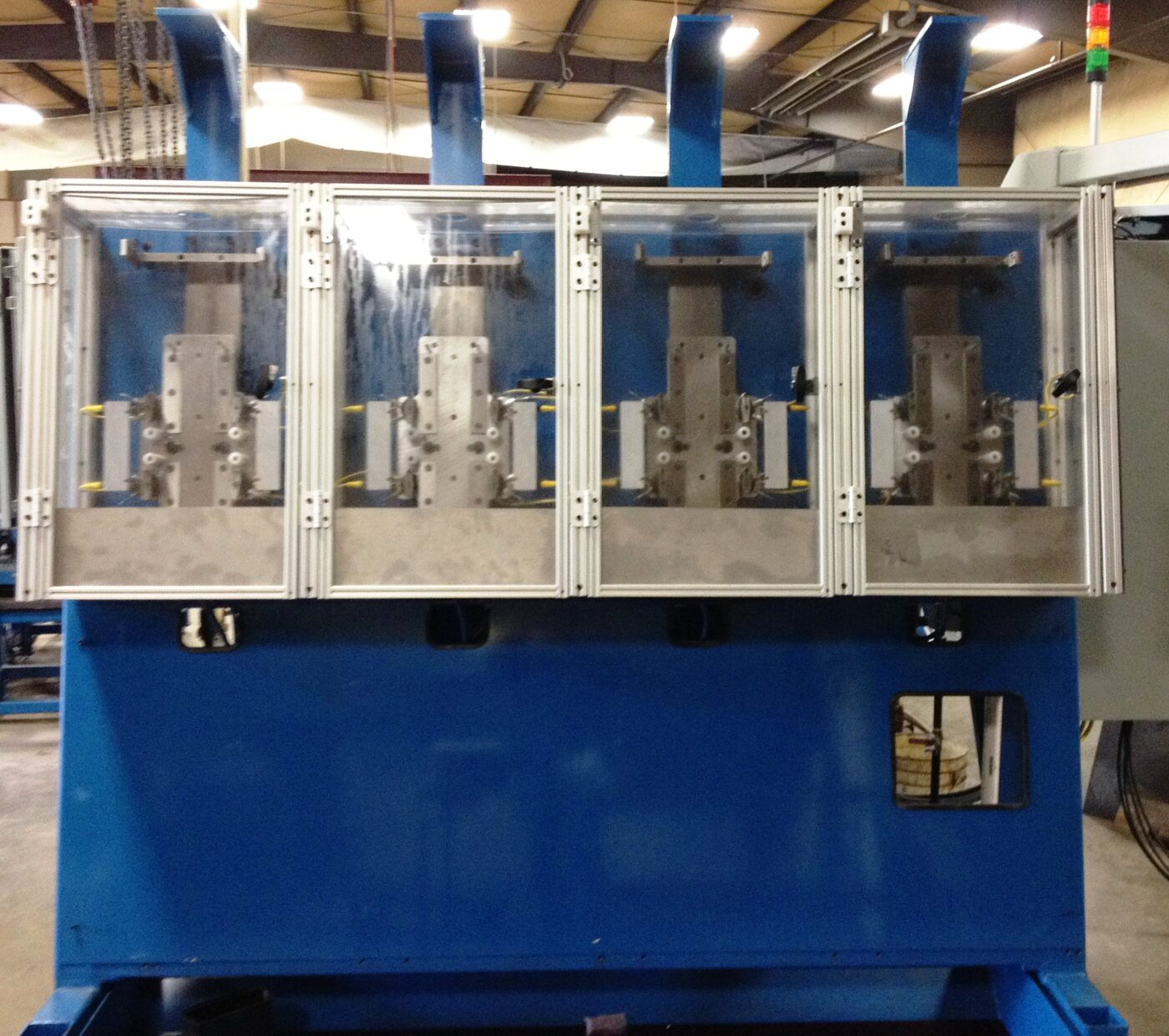
PLC, HMI, drives, vision, safety — engineered as one system
The split-vendor model — mechanical builder hands off to a separate controls integrator — is the most common reason custom automation projects miss schedule and miss runoff. The mechanical design assumes one thing about how controls will work. The controls integrator interprets the design differently. The two teams find the gap at integration, when the schedule has no slack left.
At Bristol, the controls engineer is in the same building as the mechanical engineer through the entire build. Sensor placement is decided when the bracket is designed. Safety category is selected when the guarding is drawn. PLC code is written by someone who has stood next to the machine and watched it run. The result is a machine that hits its takt the day it's installed — and holds it for the second decade of service.
Allen-Bradley, Siemens, Beckhoff — the platforms we standardize on
- PLC: Allen-Bradley CompactLogix and ControlLogix (primary); MicroLogix for simpler retrofits; Siemens S7 on customer-standard projects.
- HMI: FactoryTalk View (Allen-Bradley) as the standard platform; Siemens TIA and other industrial HMI on customer request.
- Servo motion: Kinetix (Allen-Bradley) integrated servo and Yaskawa servo drives for indexed positioning, synchronized axes, and precision feed.
- Pneumatics: SMC and Festo valve manifolds, cylinders, and flow controls — selected per application and customer serviceability preference.
- Sensing: Keyence, Banner, and Sick sensors for presence, position, and measurement; selected for environment, resolution, and teach-mode access by the customer’s maintenance team.
- Vision: Keyence IV5 and Cognex In-Sight 2D vision for part presence, orientation verification, and dimensional inspection integrated into the PLC safety and quality logic.
- Safety: Cat 3/PLd minimum on operator-access zones; Cat 4/PLe on perimeter guarding where risk assessment requires. Standards: ANSI B11, NFPA 79, ISO 13849. Safety circuits designed, validated, and documented before the machine ships.
- Communications: Ethernet/IP, Profinet, Modbus TCP, and serial protocols for upstream/downstream integration.
What ships with the machine: a controls package your maintenance team can actually use
Every Bristol machine ships with a controls documentation package designed so a competent electrician can troubleshoot it without calling us — and so we can support it remotely in the rare case they need to. Full electrical schematics (power, control, and safety circuits). Panel layout and bill of materials. I/O lists with sensor placement and tag mapping. HMI screen documentation. PLC source code where the customer requires it. Operator and maintenance manuals. Safety validation records. The controls architecture is reviewed with the customer before procurement — no surprises at runoff about platform selection.
Keeping 1990s and 2000s iron in production: controls retrofit
The mechanical structure of a well-built production machine from 1998 is still solid. What fails is the PLC the original manufacturer no longer supports, the ladder logic nobody documented, and the safety relays that fail at a rate that's starting to affect OEE. Bristol replaces the brain without scrapping the body. Current-generation Allen-Bradley or Siemens PLC, color touchscreen HMI, safety-rated architecture, documented and maintainable code — installed in the same frame that's been running production for 25 years. Typical retrofit lead: 8–16 weeks.
Frequently Asked Questions — Controls & Integration
What buyers, engineers, and procurement teams want to know before quoting a Controls & Integration project.
Does Bristol provide PLC programming services on a standalone basis?
Bristol's controls engineering is primarily delivered as part of full machine builds or substantial retrofit projects. We occasionally take standalone PLC programming work for existing customers, but we are not a general-purpose controls integration shop.
If your project is a mechanical retrofit that needs new controls, that's our sweet spot. If you need PLC programming on a third party's machine, contact us to discuss whether it fits.
What PLC platforms does Bristol program?
Standard Bristol platform stack:
- PLC: Allen-Bradley CompactLogix / ControlLogix and Automation Direct
- HMI: FactoryTalk View
- Servo: Kinetix (Allen-Bradley) or Yaskawa drives
- Pneumatics: SMC or Festo valve manifolds and cylinders
- Sensing: Keyence, Banner, Sick
- Vision: Keyence IV5 and Cognex In-Sight 2D
- Siemens S7: supported on customer-standard projects
Platform selection is documented in the controls architecture at the start of every build.
How does Bristol handle machine safety circuit design?
Safety is designed to ISO 13849, ANSI B11, and NFPA 79.
Bristol standards:
- Cat 3/PLd minimum on operator-access zones
- Cat 4/PLe on perimeter guarding where risk assessment requires
- Safety-rated PLCs (GuardLogix) or hardwired safety relays per category
- Light curtains and area sensors for operator zones
- Emergency stops and interlocked guarding
- Two-hand controls where required by the operation
Safety validation is documented at runoff. Safety design is reviewed with the customer before fabrication begins.
Does Bristol provide PLC source code with the machine?
Yes, when the customer requires it.
PLC source code is included in the controls package at the customer's request and is typical for buyers who plan to maintain the machine with their own electrical staff.
Where the customer prefers a sealed program, that is also offered. The decision is made before the project starts and documented in the controls architecture.
Can Bristol retrofit obsolete controls on an existing production machine?
Yes. Controls retrofit is a regular service:
- Replacing obsolete PLCs with current Allen-Bradley or Siemens systems
- Upgrading from text-only HMI to color touchscreen
- Modernizing safety circuits from obsolete safety relays to safety-rated PLC architecture
- Rewriting the program in documented, maintainable form
Typical retrofit lead times are 8 to 16 weeks depending on machine complexity and how well the existing system is documented.
How does Bristol document the controls package for the customer's maintenance team?
Every controls package ships with:
- Full electrical schematics (power, control, and safety circuits)
- Panel layout drawings and bill of materials
- I/O lists with sensor placement and tag mapping
- HMI screen documentation
- PLC program with source code (where applicable)
- Operator manual and maintenance manual
The goal is that a competent electrician can troubleshoot the machine without contacting Bristol, and that Bristol can support the machine remotely when needed.
Industries using Controls & Integration
The same capability serves different industries differently. These pages show how this discipline is applied for specific buyer types and project profiles.
Ready to discuss your project?
Tell us your part, your volume, and your timeline. We’ll respond within one business day with a clear next step.